What Marketers Can Learn from India’s Most Viral Internet Shows
- Date - 21 Aug 2026 12:16 pm / by Mahesh Nair
Working in business development at a creative strategy and execution partner, I consume a lot of content outside the traditional world of marketing. I follow technology closely, especially smartphones, laptops, gadgets and the creators who review them. So, interestingly, one of the marketing stories that caught my attention recently did not begin with an advertising campaign.
It began with a smartphone.
I first came across Ai+ through the controversy involving technology creators such as Gyan Therapy and Mrwhosetheboss, where the brand’s products, pricing and value proposition became part of a much larger online conversation. What initially looked like a product and technology discussion eventually turned into a lesson in attention, controversy and brand recall.
And then Ai+ appeared on Samay Raina’s India’s Got Latent.
A smartphone company that had largely been discussed in the context of technology reviews and criticism had suddenly entered one of India’s most talked-about internet shows.
That made me wonder: what can marketers learn when a technology brand chooses a comedy show, rather than a conventional technology platform, to build awareness?
The answer has a lot to do with relevance, recall and understanding how Gen Z consumes content.
From Tech Controversy to Cultural Conversation
Ai+ entered the Indian smartphone conversation at a time when several technology creators were discussing and questioning aspects of the brand and its products. Gyan Therapy and Mrwhosetheboss were among the creators whose coverage brought significant attention to Ai+.
The situation eventually escalated, with legal notices and disputes around some of the content. The controversy generated even more discussion around the brand, turning Ai+ into something more than just another smartphone company trying to enter a crowded market.
But negative attention is a complicated marketing asset.
It can create awareness very quickly, but awareness alone doesn’t create a positive brand association. A brand can become famous for the wrong reason.
This is where Ai+’s decision to associate itself with India’s Got Latent becomes particularly interesting.
Instead of continuing to communicate only through the traditional technology ecosystem, the brand entered a completely different cultural environment.
It moved from tech conversation to entertainment conversation.
And that shift is important.
Why Ai+ Chose a Comedy Show to Market a Smartphone
On the surface, India’s Got Latent and smartphones don’t have much in common.
One is a comedy and entertainment format built around unpredictable conversations, performers and Samay Raina’s irreverent humour. The other is a technology product competing in one of the world’s most competitive smartphone markets.
But there is one thing they have strongly in common:
Audience attention.
Ai+ has spoken about wanting to connect with younger audiences and identified Samay Raina and the show’s audience as relevant to that objective. The partnership positioned Ai+ as the smartphone partner for Season 2 of India’s Got Latent.
The interesting part is that the brand didn’t need to turn the show into a technology presentation.
Nobody was watching India’s Got Latent to learn about processors, cameras or battery specifications.
They were watching to be entertained.
And that is exactly why the partnership worked as a marketing idea.
The brand entered an environment where people were already paying attention.
It didn’t ask the audience to stop watching entertainment and start watching an advertisement.
It became part of the entertainment.
When the Brand Becomes the Joke
This is perhaps the most interesting part of the entire strategy.
Brands generally want control.
They want to approve the script, approve the visuals, approve the messaging and make sure the product is presented in the best possible light.
But creator-led entertainment works differently.
The creator’s personality is the reason people are watching in the first place.
So what happens when the creator makes the brand the punchline?
In a recent episode featuring Karan Aujla, Samay Raina joked about phones being stolen from the show and turned the joke towards Ai+.
Something along the lines of:
“Bhai, aapke show mein phone bohot chori hote hai, toh apne fans ko bolo AI+ phone kharidenge, no one wants to steal this phone.”
For a conventional brand team, that could sound like a nightmare.
For brand recall, it can be incredibly powerful.
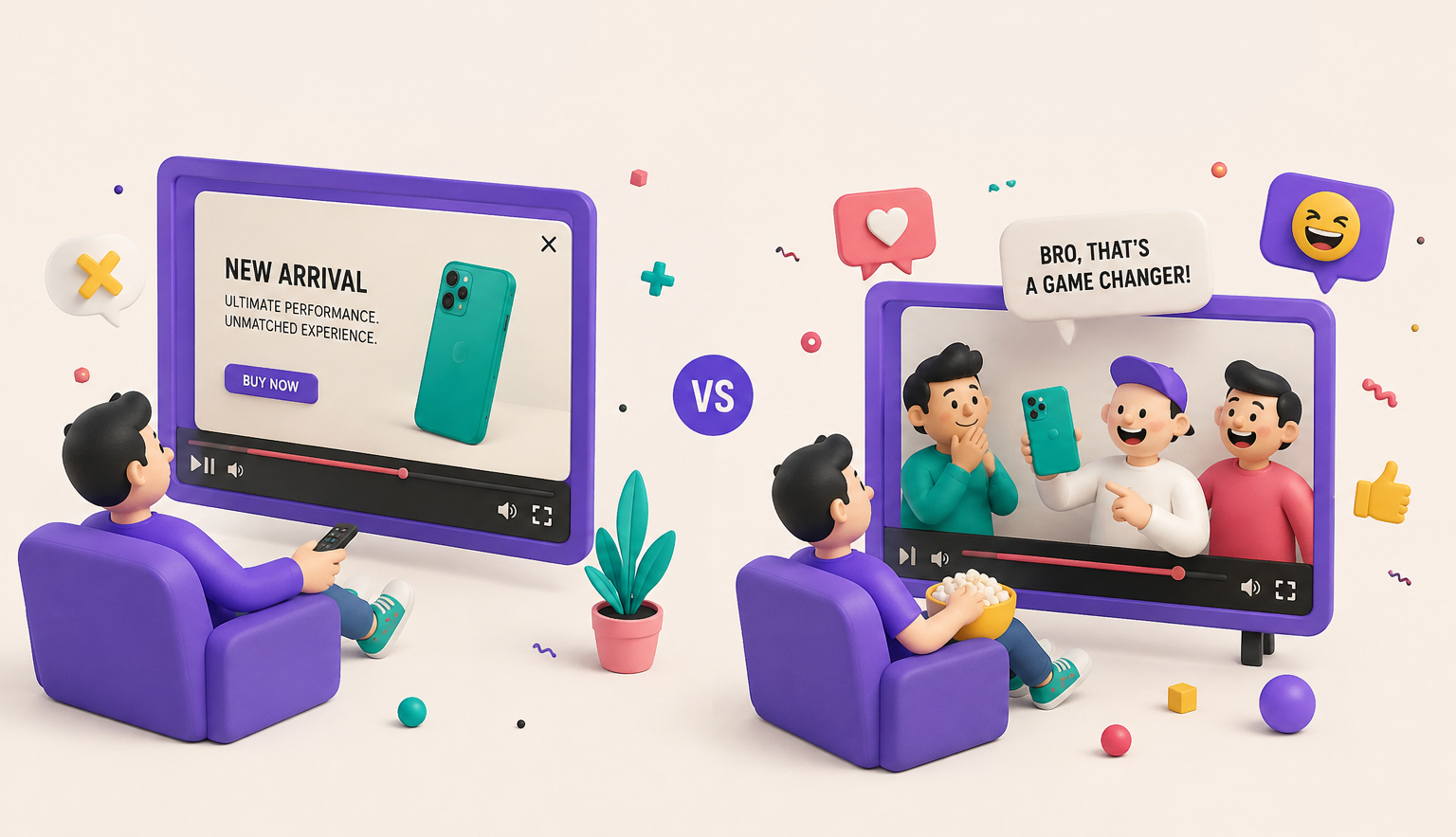
The audience may not remember a list of Ai+’s features.
They may not remember its price.
But they remember the Ai+ joke from India’s Got Latent.
And that is the difference between being advertised and being remembered.
Why Gen Z Remembers Moments, Not Advertisements
Five Marketing Lessons from India’s Viral Creator Economy
1. Relevance beats reach
A large audience is useful only when that audience is relevant to your brand.
Instead of simply asking how many people will see the campaign, marketers should ask:
“Will the right people care that we are here?”
Ai+’s association with Samay Raina was built around the relevance of his audience to the brand’s youth-focused ambitions.
2. Give creators creative freedom
The value of a creator comes from their relationship with their audience.
If a brand enters that ecosystem and tries to control every word, joke and reaction, it can quickly lose what made the partnership valuable.
The creator should still sound like the creator.
3. Humour can build stronger brand recall
People forget specifications.
They remember stories, jokes and unexpected moments.
That doesn’t mean brands should make themselves the butt of every joke. It means marketers should understand that memorability doesn’t always come from polished brand messaging.
Sometimes, it comes from breaking the expected pattern.
4. Negative attention doesn’t have to define a brand
Ai+ had already attracted considerable attention through the technology creator ecosystem and the controversy surrounding the brand.
The India’s Got Latent association didn’t erase that history.
But it created another association.
That is an important distinction.
Marketing cannot replace product quality or customer trust. But a brand can continue creating new chapters in how consumers perceive it.
5. Participate in culture instead of interrupting it
This may be the biggest lesson.
For years, brands have asked:
“Where should we place our advertisement?”
The more interesting question today is:
“Where can our brand participate in something people already care about?”
That shift takes marketers from media placement to cultural participation.
From Advertising to Cultural Participation
The rise of shows such as India’s Got Latent represents a broader change in how audiences consume entertainment.
People aren’t just watching content anymore.
They are clipping it, sharing it, remixing it, commenting on it and turning individual moments into conversations.
That creates an opportunity for brands.
But the opportunity isn’t simply to put a logo on a popular show.
It is to become part of the moment people remember after the show ends.
Ai+ may have entered India’s Got Latent as a smartphone sponsor, but the more interesting marketing lesson is what happened around the sponsorship.
The phone became part of the joke.
The joke became part of the conversation.
And the conversation created recall.
For marketers, that may be the real lesson from India’s most viral internet shows:
Don’t just advertise where culture is happening. Find a way to participate in it.
Because in an internet where consumers can skip an advertisement in seconds, being remembered may be more valuable than simply being seen.
Written By
I work in business development at Enki Studio, where I work closely with brands and businesses on creative and communication challenges.Outside of work, I spend a lot of time following technology, creators, internet culture and the way people discover and talk about brands online. I’m particularly interested in the space where marketing, culture and content intersect, and in understanding why some ideas get remembered while others are simply scrolled past.This blog is an attempt to explore those observations and what marketers can learn from the changing way people consume content.