AI Fatigue and the Quiet Disappearance of Wonder
- Date - 7 Aug 2026 12:56 am / by Suruchi Mallik
Lately, I have been hearing one sentence over and over again.
“I don’t get excited by ideas the way I used to.”
Sometimes, I catch myself saying it too.
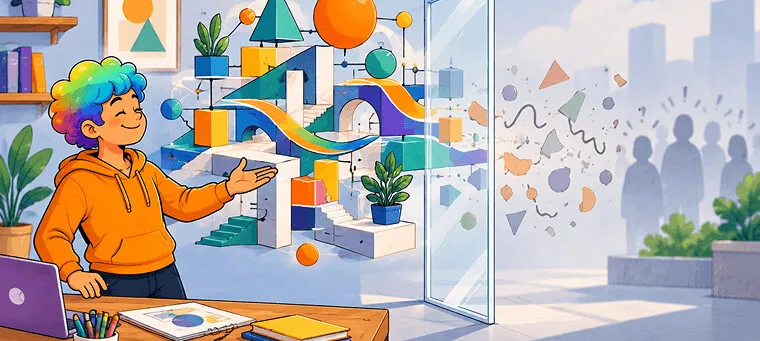
There was a time when an idea existed only in my head. It was blurry, unfinished and almost impossible to explain. I would spend days chasing it, reading things that had nothing to do with the brief, wandering through books, films and conversations, hoping that somewhere between all those unrelated things, the missing piece would quietly reveal itself. The joy was never just in making the final visual. It was in slowly discovering it.
Today, I can get surprisingly close to that imagined visual in a matter of minutes.
And somehow, that has made the journey feel shorter.
Not easier.
Just shorter.
What started as a fascinating playground for exploration has now become almost inseparable from the creative process. AI is no longer something you occasionally experiment with. It has quietly become an expectation. If you are not using it, it often feels like you are voluntarily stepping behind while everyone else races ahead.
Naturally, I embraced it too.
It helps me visualise ideas quickly. It saves hours of repetitive execution. It lets me test concepts that would have otherwise remained scribbles in a notebook. For all of that, I am genuinely grateful.
But somewhere along the way, I realised that the thing making me tired wasn’t AI itself.
It was the sameness.
Perhaps AI fatigue is not really fatigue from AI.
Perhaps it is the fatigue of seeing the obvious repeated so many times that surprise has quietly become a luxury.
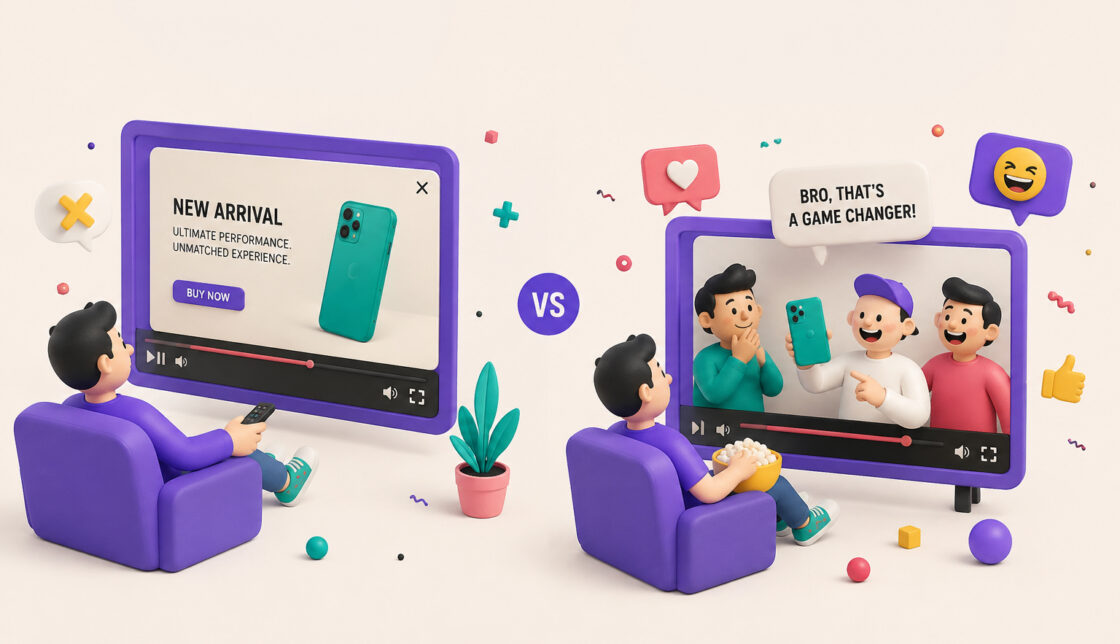
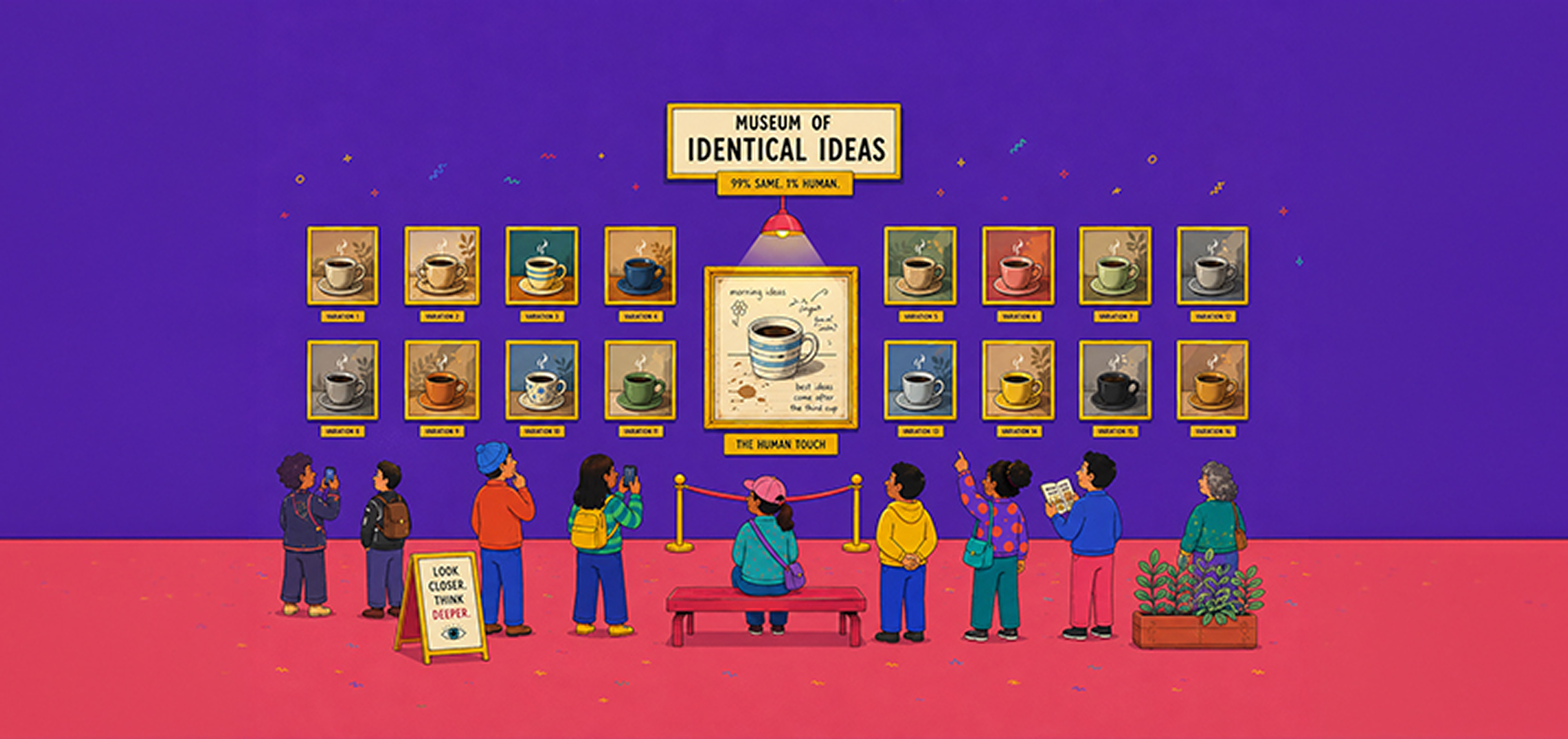
Every day we scroll through thousands of beautifully rendered visuals. The lighting changes. The colours change. The textures become more refined. Yet after a while, they begin to blend into one another because underneath all that polish, the thinking often remains remarkably similar.
We are no longer lacking inspiration.
We are drowning in interpretations of the same idea.
When Everything Starts Looking Familiar
Recently, I was working on a packaging design project. Like most designers today, my first instinct was to ask AI for concept directions. Within seconds, it gave me beautifully composed ideas. I searched through references online hoping to find something unexpected, only to realise that most of the work looked almost identical to what AI had already suggested.
Different brands.
Different products.
The same thought.
That was the moment I stopped asking AI for better concepts and started asking myself a better question.
“Why is everyone approaching this brief from exactly the same direction?
The answer wasn’t another prompt.
It was curiosity.
I stopped looking at packaging altogether. I started reading things that had nothing to do with the project. I followed words instead of visuals. I looked for stories instead of references. Somewhere in that process, the idea slowly appeared, not because AI had generated it, but because I had wandered far enough away from the obvious to find something that felt worth saying.
AI helped me build it.
It did not help me arrive there.
That distinction feels incredibly important.
I don’t think AI is making designers less creative.
I think it is making execution so effortless that we are beginning to mistake execution for creativity itself.
The strongest ideas have rarely come from finding the fastest answer. They have come from asking a question no one else thought to ask. From noticing something everyone else overlooked. From remembering a childhood habit, a conversation with a stranger, a sentence from a book read years ago, or a feeling that refuses to leave long after the moment has passed.
Those things don’t exist inside a dataset.
They exist inside people.
Where Ideas Actually Come From
The growing dependency on AI worries me, not because it will replace us, but because we are slowly inviting it into the very part of the process that makes us human. We ask it for concepts before we ask ourselves what we actually think. We look for inspiration before we have allowed ourselves to observe. We prompt before we pause.
Design has never been about finding answers quickly.
It has always been about asking better questions.
Interestingly, while AI-generated imagery continues to become more polished, some of the world’s most iconic luxury brands seem to be moving in a different direction. Hermès, for instance, has embraced hand-drawn illustrations and tactile craftsmanship in its recent campaigns. Visible brushstrokes, textured paper and imperfect lines suddenly feel refreshing, not because they reject technology, but because they carry the unmistakable presence of a person behind them.
It makes you realise something rather simple.
In a world where perfection has become effortless, humanity becomes the thing that catches your eye.
Maybe that is what we have been craving all along.
Not less technology.
Just more intention.
Leaving Room for Wonder
I don’t believe the answer to AI fatigue is abandoning AI. That would be like refusing to use a camera because photography became easier. The tool is not the problem. The danger lies in forgetting where ideas come from in the first place.
Read before you prompt.
Observe before you generate.
Question before you search.
Allow yourself to be bored every once in a while. Walk without headphones. Pick up a book that has absolutely nothing to do with the brief sitting on your desk. Watch the way children invent games from ordinary objects. Listen to conversations you were never meant to be part of. Wander through a museum without taking photographs. Bake something without looking for the perfect recipe.
Let your mind collect tiny, wonderfully unnecessary details that seem to have no purpose at all, because more often than not, those are the very details that quietly return months later disguised as an idea.
If AI can give us back time, then perhaps our responsibility is not to fill that time by generating even more, but by noticing more. Because long after prompts become better, models become smarter and images become indistinguishable from reality, I have a feeling that the ideas people will continue to remember are the ones that could only have come from someone who paid attention to the world just a little differently, who stayed curious a little longer than everyone else, and who still believed that before every good answer, there is almost always a far more beautiful question waiting to be asked.
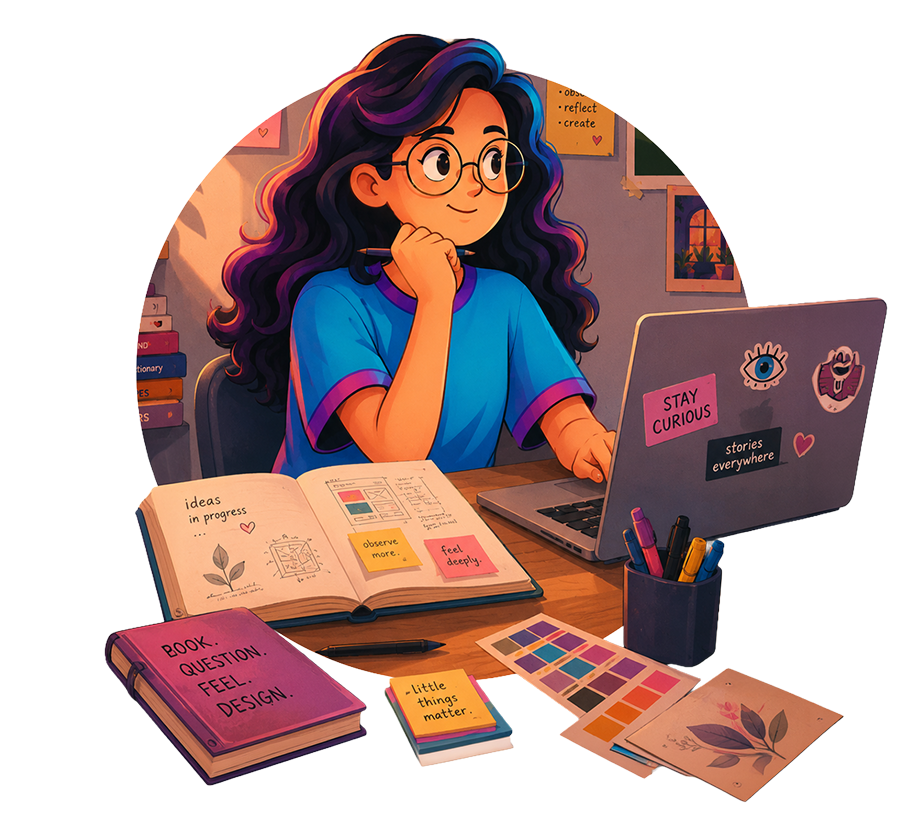
Written By
Suruchi Mallik is a graphic designer and visual storyteller who collects ideas the way some people collect souvenirs. She believes the best concepts are found somewhere between an overheard conversation, a museum afternoon, the pages of a well-loved book and a cake rising in the oven. Through branding, packaging and editorial design, she enjoys turning quiet observations into visual stories that invite people to pause, look closer and wonder a little longer.