How Does a Designer's Mindset Differ When AI Comes Into Play?
- Date - 10 Aug 2026 01:16 pm / by Avinash Kumar Verma
I started my journey with a technical background, and the shift toward the creative field happened gradually. When I began learning design and exploring AI in design, my focus was mostly on understanding tools – Photoshop, Illustrator, Figma, typography, layouts, and the overall process of execution. Like many beginners, I assumed that becoming technically stronger would naturally make me a better designer.
That was also the phase when generative AI suddenly became impossible to ignore.
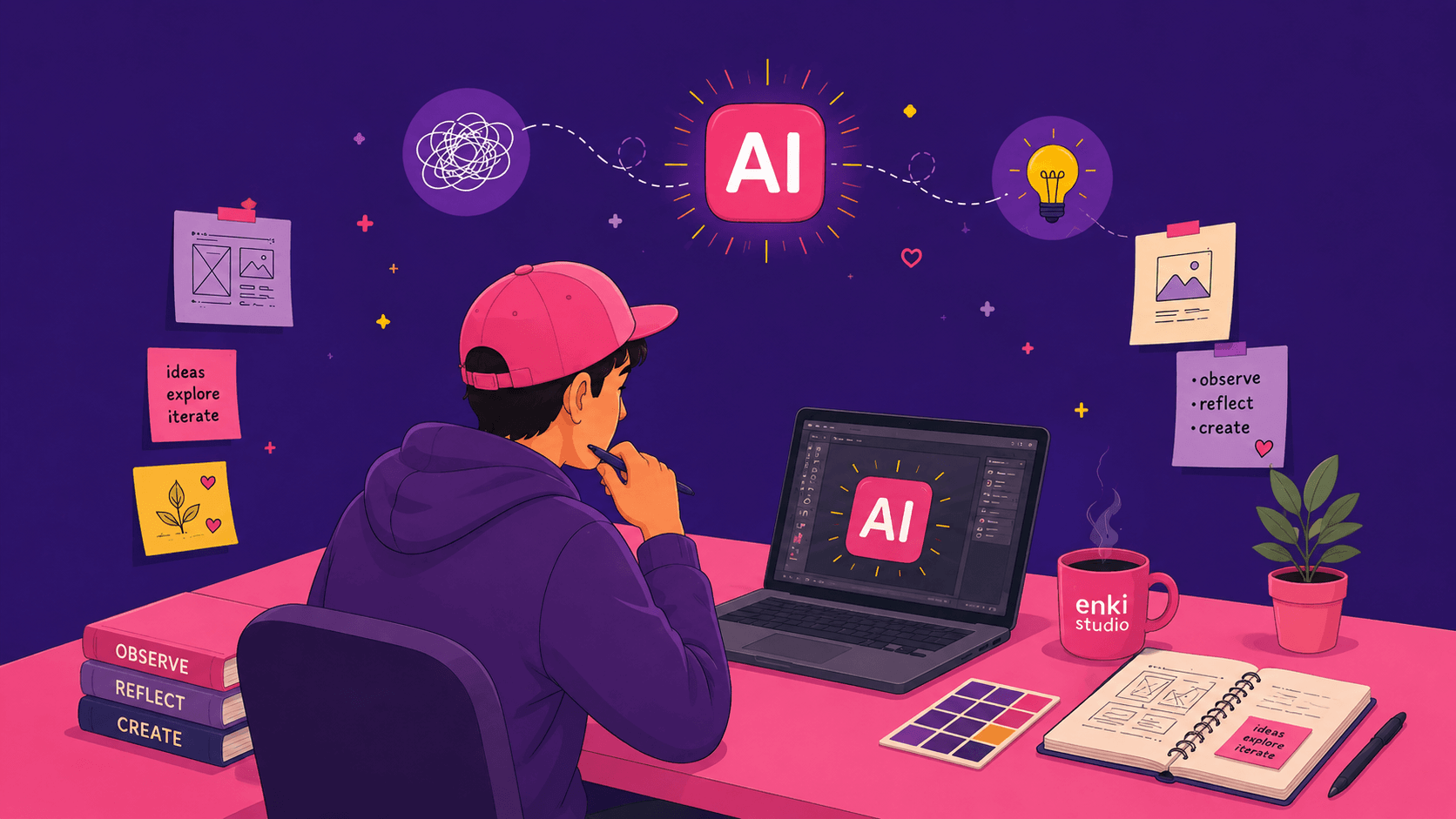
I explored AI in design with curiosity rather than a strong opinion. Initially, it felt like just another tool, but over time I realized that the real change was not in the output – it was in the way I started thinking. This, I’ve come to believe, is the actual difference in a designer’s mindset before and after AI enters the workflow: the shift isn’t primarily about speed, it’s about how ideas get formed, questioned, and refined in the first place.
From Execution to Exploration
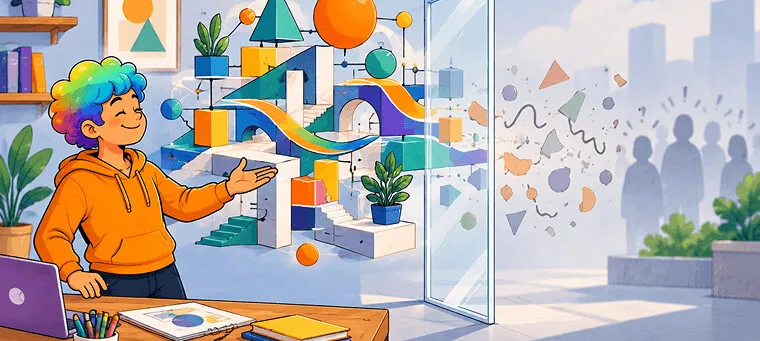
Earlier, when I had an idea, most of my energy went into executing that one direction properly. The process was usually linear: think → make → improve. As AI became part of my creative workflow, execution became a little faster, and that created something I did not expect: more space for exploration, design thinking, and experimentation.
Instead of asking, “How do I make this?” I started asking, “What are the different ways this could be approached?”
That shift sounds small, but it changed the experience of designing. I found myself getting less attached to the first version of an idea and more interested in exploring alternatives, comparing them, rejecting some, combining others, and discovering possibilities that might not have appeared if every variation required significant effort. This is one of the more practical benefits of using AI tools early in the process, not that the final output is better on its own, but that more directions get a fair chance before one is chosen through genuine critical thinking and problem solving.
The most interesting part was that AI did not make me feel less creative. It made me realize that creativity is not only about producing something from scratch; sometimes it is about seeing more possibilities than before, and trusting design judgment to tell the difference between a direction that looks good and one that actually works.
A Shift in Problem Solving
While learning design, I also noticed that my mindset was changing from mastery to adaptation. Technical skills still matter, and I do not think AI can compensate for weak design fundamentals. No amount of generative AI variation fixes a poor sense of layout, hierarchy, or typography. But I no longer see technical skill as the final destination. The bigger shift happened in how I approach ideas, problem framing, and decision making.
Sometimes the first idea is not the strongest one. Sometimes the most visually impressive direction is not the clearest. Sometimes a better perspective appears only after you stop trying to perfect the initial thought. In that sense, AI has influenced my creative mindset less by giving answers and more by encouraging exploration and deeper critical thinking about why a design choice actually works.
Rethinking Time and Creativity
Another change I noticed was in my relationship with time. When parts of execution become easier, the time saved does not simply disappear. It gets redistributed toward thinking, comparing, understanding what needs to be communicated from a user’s perspective, and deciding what to keep or remove. In practice, this has meant spending noticeably more time on the “why” behind a design choice than I used to, and less time defending a first draft simply because it took hours to produce. It has also meant paying closer attention to human psychology and empathy, trying to understand not just what looks right, but what a real person actually needs from a design.
For me, this is not really a story about AI replacing designers. It is more about learning design while the landscape itself was changing. Because AI became part of the journey so early, it also became part of the way I developed my creative mindset from the start, rather than something I had to unlearn old habits to accommodate. It shaped how I think about design systems, communication, and human-centered design as a whole, not just individual pieces of work.
Today, I still see AI as a tool, and design tools will continue to evolve. But the most meaningful shift has been moving from treating design mainly as execution to treating it as exploration. Becoming a better designer no longer feels only about working faster; it feels more about looking at the same problem from multiple angles, asking better questions, and choosing a direction with greater intention. It’s less about mastering software and more about building genuine human-AI collaboration, knowing when to lean on a tool and when to lean on judgment, empathy,and lived experience instead.
And perhaps that is the mindset difference that stands out the most to me when AI comes into play in design: not replacing the human side of creativity, but creating more room for curiosity, experimentation, and thoughtful decision making.
Written By
Avinash Kumar Verma is a graphic designer with a technical background who found his way into the creative world, building his career alongside the evolution of AI. With a love for gaming, experimentation, and figuring out how things work, he approaches design with a similar mindset: explore, test, break things apart, and find unexpected ways to build them back better.