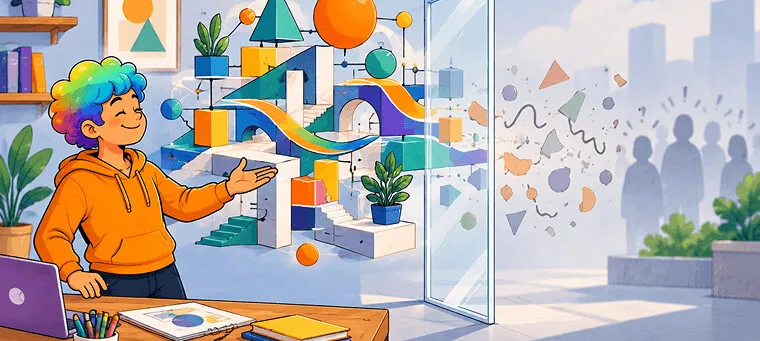
Your Old Design Didn't Get Worse. Your Eyes Got Better.
- Date - 12 Aug 2026 12:16 pm / by Amit Kandpal
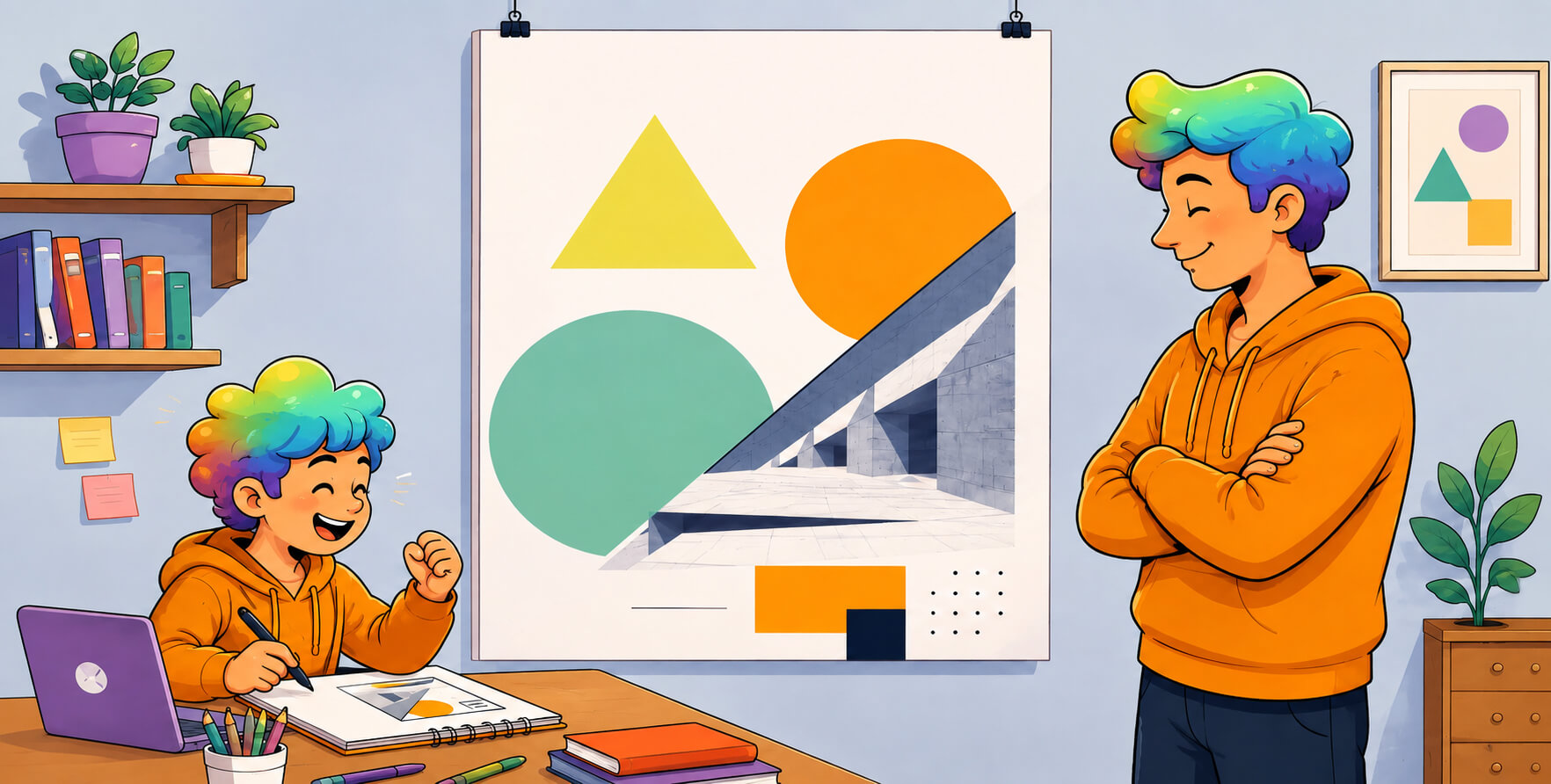
Here’s a strange little experiment. Go find a design you made two or three years ago. Something you were genuinely proud of. Something you once called your best work.
Now look at it again. Really look.
Chances are, somewhere between “I loved this” and “I built this,” a third feeling sneaks in. A cringe. The spacing feels off. The colors clash. The hierarchy makes no sense. And a question follows right behind it: “How did I ever think this was good?”
I’ve asked myself that exact question more times than I’d like to admit. And every single time, I’ve landed on the same answer, one that took me a while to actually believe: the design didn’t get worse. My eyes did.
Stick with me, because once you see this pattern, you can’t unsee it. It changes how you look at every piece of “old” work you’ve ever made.
The Masterpiece Trap
When you finish something, you’re not just looking at pixels. You’re looking at the hours, the problems you cracked, the deadline you beat. It feels complete. In that moment, it ‘is’ the best you knew how to make.
We just mistake that feeling for a permanent verdict. We assume “this is great” means “this will always be great.” But design isn’t judged in a vacuum, it’s judged through the eyes of the person looking at it. And that person is never done changing.
If you ask ten designers “what is design”, you’ll get ten different answers, some will say aesthetics, some will say function. But the closer you get to the real “meaning of design”, the more you realize it isn’t a fixed thing you make once. It’s a moving reflection of who’s making it, updated every time you grow.
Growth Happens Quietly, Until It Doesn't
Nobody’s “design thinking” sharpens overnight. There’s no single day where you “become better.” It happens in invisible steps buried inside your everyday “design process” : a mistake here, a stretch project there, a piece of feedback that stung a little but stuck with you far longer than you expected.
I used to think a “good” design just needed to look clean. Symmetrical. Polished. It took real client pushback, a few pitches that flopped despite looking gorgeous, and more than one project I quietly redesigned overnight to finally understand something obvious in hindsight: good design solves a problem first, and looks clean second. Nobody hands you that lesson in a course. You only get it by getting it wrong a few times, and that’s exactly where thesharpest “design lessons” come from.
Here’s the part that should make you a little curious: if growth is invisible day to day, how much have you already changed without noticing? You won’t know until you look back.
Discomfort Is the Good Sign
Here’s a twist most people don’t expect: feeling nothing when you look at old work is actually the concerning outcome. No cringe, no itch to fix anything? That might mean your skills have quietly plateaued.
Cringing, on the other hand, is proof of progress. It means you can now see proportion, balance, restraint: things past you literally could not perceive, no matter how hard they tried. In my own experience, the projects I was proudest of at the time are almost always the ones I’m most embarrassed by today. That’s not a coincidence. It’s the clearest possible evidence that skill was quietly building underneath all that confidence, waiting to be noticed.
So if you’re cringing right now thinking about your own old work, good. That discomfort is your design career working exactly as it should.
The World Keeps Moving Your Eye Too
It’s not just you evolving, the ground underneath the craft is shifting too, and fast. Conversations around design and AI have moved from “will it replace us” to “how do we work with it.” Generative AI and AI in design tools now suggest layouts before you’ve even opened a blank canvas. Emerging technologies, even bold ideas like the metaverse, keep stretching how designers approach UX design and product design. The tools change, the expectations change, and your eye is forced to adapt right along with them.
Through all of it, one thing stays constant: good user-centered design never goes out of style, no matter how many new tools try to reinvent the workflow around it. Master that lens, and every new technology just becomes another way to apply it.
Trust the Journey, Not the Timeline
Next time you cringe at something you made, try swapping “I was bad at this “for” I’ve grown since this.” One statement judges you. The other simply observes your design journey, and only one of them actually helps you keep going.
Your portfolio, if you really look at it, is a timeline of design evolution in motion. It’s proof that learning design never truly stops, and that your design philosophy was never meant to stay frozen in place. Every experienced designer further along this road than you will tell you the exact same thing, usually with a laugh and an old project of their own to point to.
That’s not failure. That’s the entire point.
The Quick Takeaway
If you remember nothing else from this, remember this:
- The discomfort you feel looking at old work is not a red flag. It’s a growth signal.
- Old “mistakes” weren’t mistakes at the time. They were the best decisions your past skill level could make.
- Real design thinking grows quietly, in the background, project after project. You only notice it in hindsight.
- The tools around you (Generative AI, AI in design, and other emerging technologies) will keep changing, but strong user-centered design instincts remain your constant advantage.
- Feeling nothing when you revisit old work is the actual warning sign, not the cringe.
So the next time an old design makes you wince, don’t treat it as proof that you did something wrong. Treat it as evidence: evidence that you’ve grown, that the future of design keeps asking more of you, and that there’s still further to go.
Your old design didn’t get worse. Your eyes just got better. And if you keep creating, they’re only going to get sharper from here.

Written By
Hi, I’m Amit, a graphic designer who is curious about how a simple idea can turn into something visual. For me, design is a mix of creativity, problem solving, and experimentation. I find inspiration in the smallest details, from colours on the street to the way a movie builds its world. I like observing, questioning, and turning those little moments into ideas. For me, creativity is about always having something worth exploring.